
Reversible or not: the core design question for enterprise AI
The most useful way to classify what an AI system may do is by whether the action can be undone.
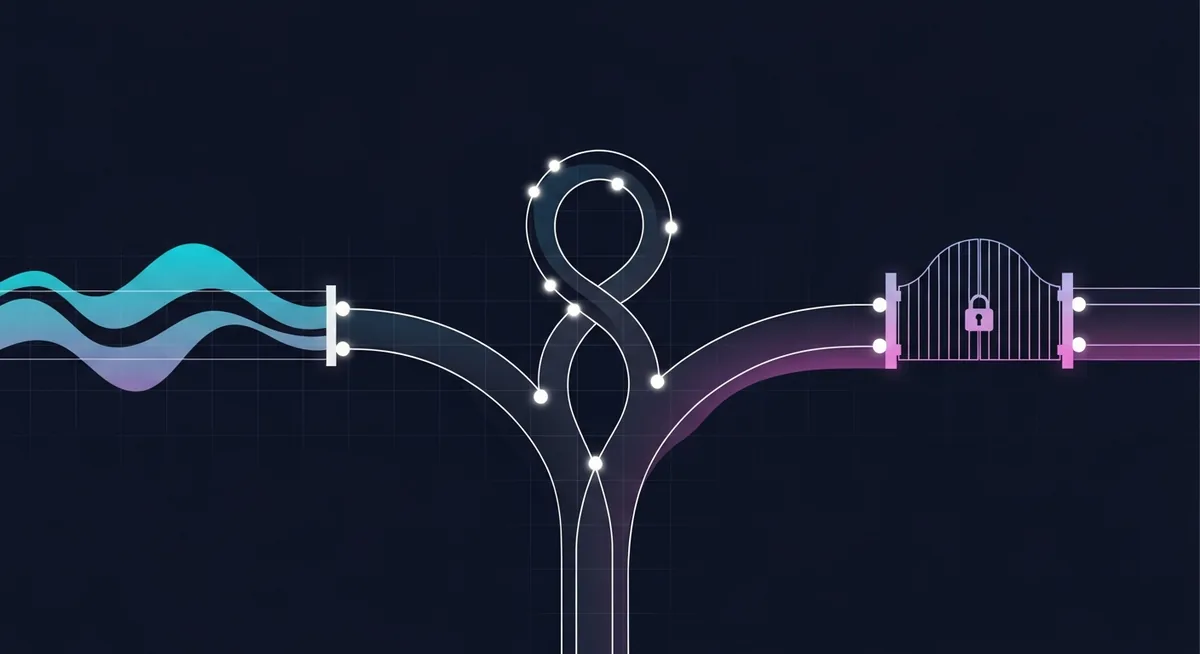
Discussions about trusting AI with real work tend to get stuck on model capability. Is the model good enough, accurate enough, aligned enough? These are reasonable questions, but they are not the first one. The first question is structural: of the things this system can do, which can be undone, and which cannot? Get that classification right and a great deal else falls into place. Get it wrong and no amount of model quality will save you.
Three categories, not one spectrum
It helps to sort actions into three plain buckets:
- Read-only. The system observes and reports. It changes nothing. A mistake here costs attention, not damage.
- Reversible writes. The system changes state, but the change can be cleanly undone: a draft saved, a ticket created, a record updated with full history retained.
- Irreversible or high-impact. The change cannot be taken back, or the cost of taking it back is severe: money moved, a message sent to a customer, data deleted, a production configuration changed.
Most real work is a chain of these. The design task is to know which link you are on at every step, and to treat the buckets differently.
Why capability is the wrong axis to start from
If you organise around "how good is the model," you end up applying the same caution everywhere, which is either too much friction for safe actions or too little control for dangerous ones. Organising around reversibility lets you match the control to the stakes:
- Read-only actions can run freely, because the worst case is a wasted glance.
- Reversible writes can proceed with light checks, because there is an undo.
- Irreversible actions are where authority, policy and human approval belong, because there is no undo and the record has to be right the first time.
A capable model reduces how often you reach for the brakes. It does not change where the brakes need to be.
"AI proposes, humans decide" lives at the boundary
The line between reversible and irreversible is exactly where human judgement earns its cost. Asking a person to approve every read is theatre; it trains people to click through. Asking a person to approve an irreversible action is meaningful, provided the request arrives with what they need to decide:
- What the action will do, in concrete terms.
- What authority and policy it is being taken under.
- The record that will exist afterwards, so the decision is inspectable later.
Human approval works when it is rare and consequential. It fails when it is constant and rote. Reversibility is what tells you which is which.
Turning reversible into a design goal
The classification is not just a filter placed in front of dangerous actions. It is a prompt to redesign work so that fewer actions are irreversible in the first place:
- Prefer staging and drafts over direct changes, so a proposal can be reviewed before it commits.
- Prefer soft-deletes with retention over hard deletes.
- Prefer batched, previewable changes over a stream of individual irreversible ones.
- Keep an undo path wherever the domain allows one, and be explicit about the places it does not.
Every action you can move from the irreversible bucket to the reversible one is an action you can let AI take with far less ceremony, and far less risk.
The question to hold onto
When you look at an AI system proposed for real work, resist starting with how clever it is. Start with a map of what it can do, sorted by whether each thing can be undone. That map tells you where to spend your controls, where human decisions actually matter, and where a single confident mistake would be one you cannot take back.
← Back to insights